
Back to all Post

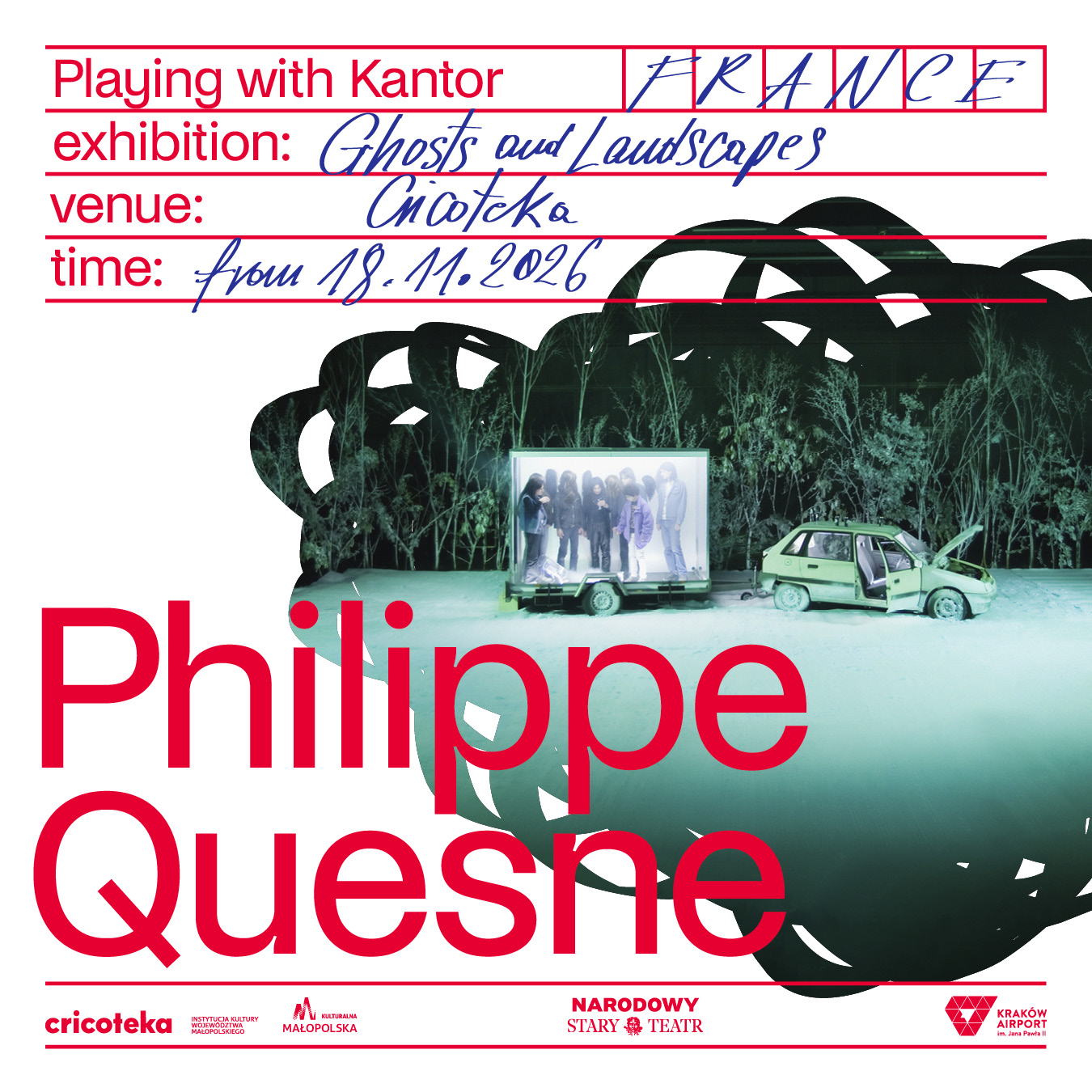
Ghosts and Landscapes – Philippe Quesne’s Exhibition Opening on 18 November 2026

Artist: Philippe Quesne

Artistic Collaboration: Élodie Dauguet

Opening: 18 November 2026, 6:00 pm

Exhibition Dates: 19 November 2026 – 28 February 2027

Venue: Cricoteka, 2–4 Nadwiślańska Street, Kraków

Co-organiser: Helena Modrzejewska National Stary Theatre in Kraków

Ghosts and Landscapes – About the Exhibition

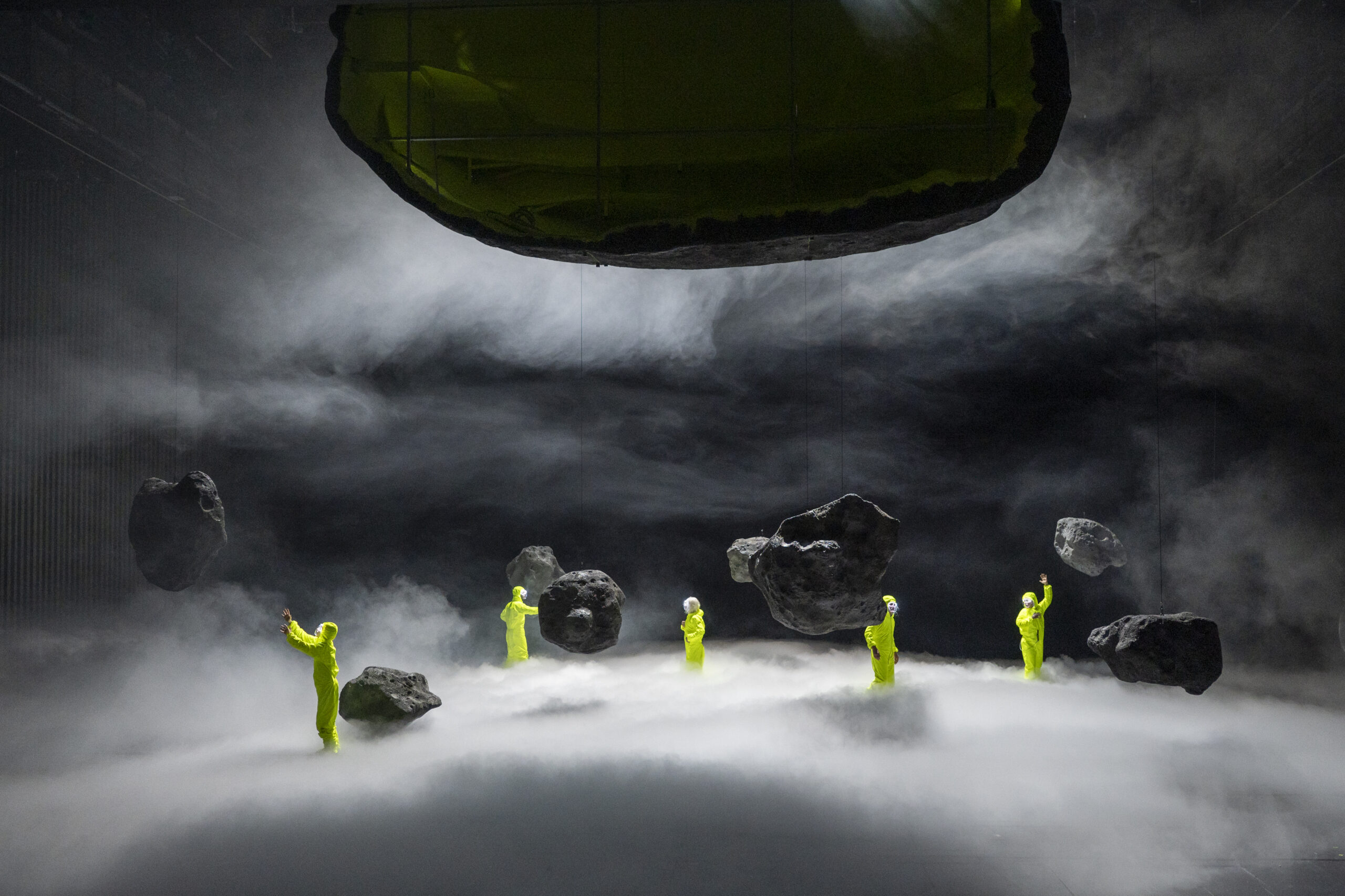
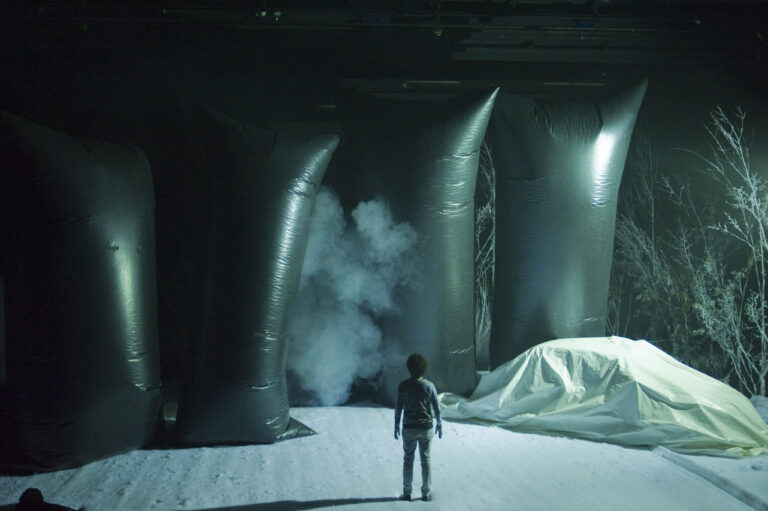
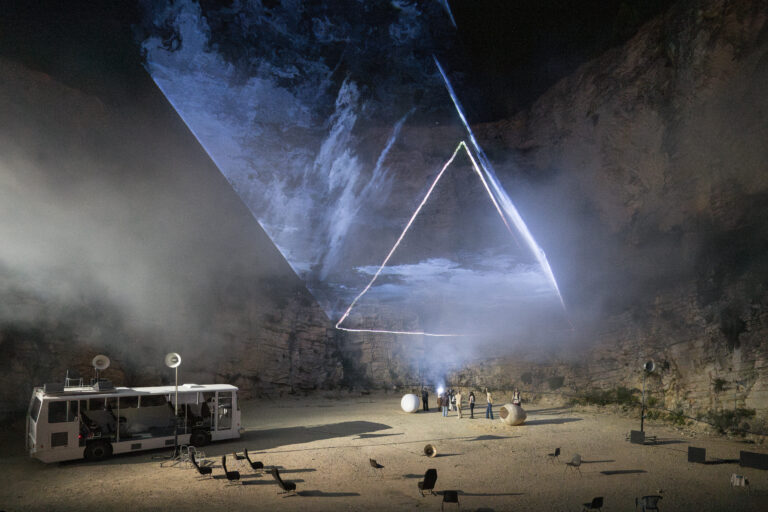
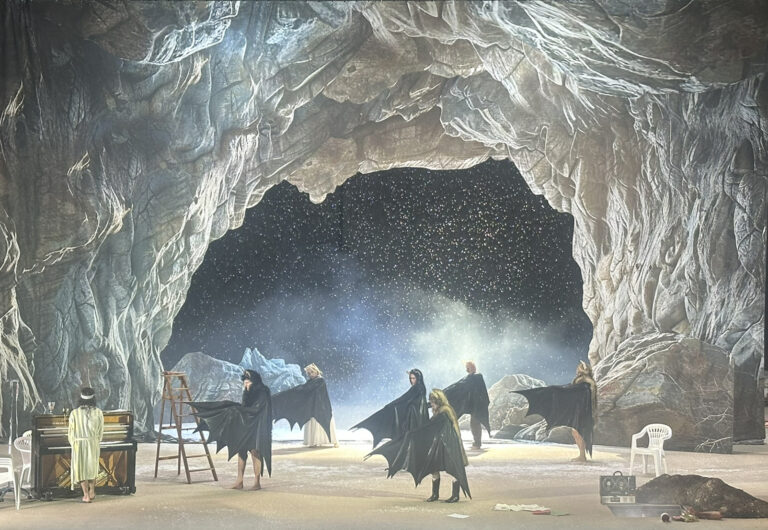
Philippe Quesne revolutionises the traditional creative process by beginning work on each performance with the construction of its stage environment. He has taken a similar approach to creating his exhibition at Cricoteka. Ghosts and Landscapes is an immersive world governed by its own laws of physics, with its own natural environment and even its own microclimate. Quesne’s stage designs are autonomous landscapes: meteors, layers of artificial snow, fans, and stuffed or artificial animals appear on stage. Rather than following a plot, visitors are invited to contemplate these painterly, intensely atmospheric and melancholic images.

Vivarium Studio

The exhibition presents Philippe Quesne’s autonomous audiovisual installations, which continue to exist independently after the theatrical productions from which they originate have ceased to be performed. The installations offer an insight into the director’s aesthetic and creative methods across different periods of his theatrical career.

In Quesne’s vivariums, the traditional theatrical hierarchy dissolves. Everyday objects—ladders, old wigs, a car, musical instruments and an inflatable dinghy—do not function as ordinary props. Instead, they become autonomous actors with agency of their own. It is this distinctive sensitivity to the materiality of theatre, the status of props and the subjectivity of objects that brings Quesne’s work close to that of Tadeusz Kantor. As a teenager, Quesne had the opportunity to experience Kantor’s work first-hand.

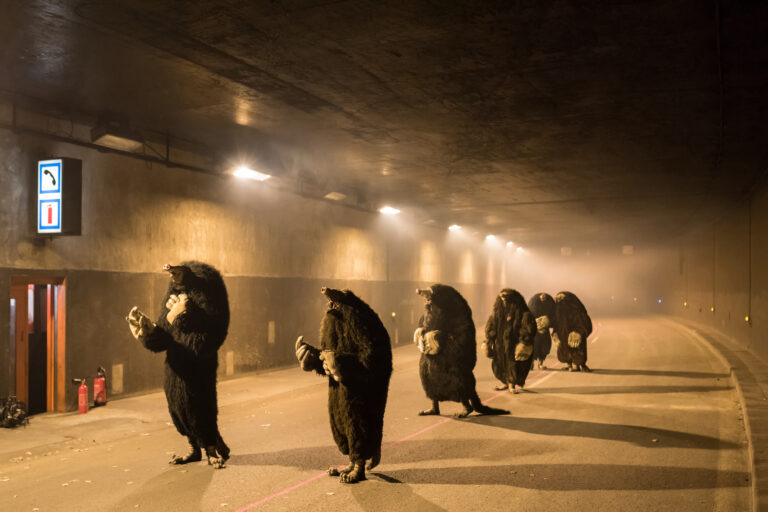
In addition to the installations, visitors will be able to watch screenings of three performances: La Mélancolie des dragons, a cult production about a group of hard-rock enthusiasts who, amid a snow-covered forest landscape, attempt to get a broken-down Citroën running and design an ideal, melancholic amusement park for an elderly woman; Jardin des délices, a spectacular retro-futuristic odyssey inspired by the paintings of Hieronymus Bosch, combining ecological science fiction with the conventions of the Western; and La Nuit des taupes / Welcome to Caveland, which transports audiences into an underground world of giant moles who build a micro-community of their own.

Bearing the slogan “NO NATURE, NO FUTURE”, the exhibition will serve as an act of passive resistance to the fear of the end of the world, in keeping with the French director’s artistic practice to date. Ghosts and Landscapes will also herald the premiere of a new performance by Philippe Quesne at the Helena Modrzejewska National Stary Theatre in Kraków.

Vivarium Studio
Vivarium Studio
Vivarium Studio

Program

The exhibition will be accompanied by a public programme. Details of upcoming events will be announced soon.

The programme will form part of the Poland–France Cultural Season in 2027.

About the Artist

Philippe Quesne

A theatre director, scenographer and visual artist, Philippe Quesne is recognised as one of the most original and consistent figures in contemporary European theatre. He studied at two art schools in Paris: École Estienne, specialising in graphic design, and École Nationale Supérieure des Arts Décoratifs, where he studied scenography. During the first ten years of his professional career, beginning in the mid-1990s, he worked as a scenographer for theatre and opera productions and exhibitions at contemporary art museums. During this period, he collaborated with directors including Florence Giorgetti, Olivier Besson and Robert Cantarella. His artistic language was particularly shaped by his engagement with the dramaturgy of Philippe Minyana, Noëlle Renaude and Michel Vinaver—writers who challenged traditional dramatic structures, realism and the hierarchy of theatrical means.

In 2003, Quesne founded the independent company Vivarium Studio, making his debut with Le Démangeaison des ailes (2003). In the following years, he created a series of performances that became part of an established international repertoire, including Des Expériences (2004), D’après nature (2006), L’Effet de Serge (2007), La Mélancolie des dragons (2008), Big Bang (2010) and Swamp Club (2013). He also published four original booklets exploring the relationship between humans, nature and art: Actions en milieu naturel (2005), Petites réflexions sur la présence de la nature en milieu urbain (2006), Thinking About the End of the World in Costumes by the Sea (2009) and Bivouac (2011).

Vivarium Studio

Founded by Philippe Quesne in 2003, Vivarium Studio is a unique theatrical laboratory whose aesthetic derives directly from the metaphor embedded in its name. A vivarium—a glass enclosure in which one observes the unhurried lives of animals within an artificially recreated ecosystem—serves here as a model for theatre. The stage becomes a glass terrarium, often physically separated from the audience by a glass “fourth wall”: a microcosm in which people and objects coexist organically. Scenography and its constituent elements exist on an equal footing with performers, blurring the boundaries between nature and artificiality.

vivariumstudio.fr 

Accessibility

The nearest public transport stops are Korona (tram and bus) and Plac Bohaterów Getta (tram). Cricoteka does not have a car park for visitors. Two parking spaces for people with disabilities are available on Nadwiślańska Street, near the entrance from the Father Bernatek Footbridge. However, the high kerb may make getting out of a vehicle difficult. If you notify us in advance, we can reserve a temporary parking space in the square.

The most convenient entrance to the building is through Cricoteka Square. After passing through the glass doors, proceed to the lift or staircase. The ticket office is located on level -1. Please go there if you do not have a ticket for an event or need further information or assistance.

To reach the theatre hall, go down or take the lift to level -1. The ticket office staff will direct you from there. If you notify us in advance, you can also access the hall directly from Cricoteka Square.

If you need further information or would like assistance, Polish Sign Language (PJM) interpretation, audio description, or have any other needs we should be aware of to help you feel comfortable, please contact our Accessibility Coordinator:

Anna Rejowska (email: rejowska@cricoteka.pl, tel.: +48 505 319 882)

It is also possible to arrange a pre-visit.

For more information about accessibility, visit https://cricoteka.pl/pl/dostepnosc/.

Vivarium Studio

Additional Information

Playing with Kantor: France

Philippe Quesne’s exhibition Ghosts and Landscapes is part of this year’s Playing with Kantor: France programme.

We return to Playing with Kantor once again, this time to explore three important figures on the contemporary French arts scene. This year’s edition focuses on the work of Gisèle Vienne, Philippe Quesne and Nach. Through their practices, we will examine how Tadeusz Kantor’s art continues to live on in the work of contemporary artists in France. In this edition of Playing with Kantor, curated by Dorota Semenowicz, we seek to ask questions not about the past, but about the present. Has France confined this Polish artist to a museum display case, or does his work remain a living source of inspiration? We will reflect on these questions in September and November this year.

The curator of Playing with Kantor: France is Dorota Semenowicz.

Additional Materials

PHILIPPE QUESNE – Biography

Team

Exhibition Production: Aldona Mikulska, Adam Nehring
Promotion: Małgorzata Kmita-Fugiel, Zofia Mikołajska, Martyna Nowak
Implementation Team: Anna Bargiel, Wiktor Bury, Justyna Droń, Mariusz Gąsior, Ewa Kaczmarczyk, Valentyna Khomenko, Agata Klakla, Olga Konik, Jolanta Lang, Michał Lelek, Piotr Masoń, Agnieszka Oprządek, Konrad Pachel, Małgorzata Paluch-Cybulska, Anna Rejowska, Maciej Satała, Tomasz Stefaniak, Barbara Szarek, Aleksandra Treder, Krzysztof Warmus, Olena Yanushewska, Natalia Zarzecka
Visual Identity: Kuba Sowiński

Organiser

Tadeusz Kantor Art Documentation Centre CRICOTEKA in Kraków

Co-organiser

Helena Modrzejewska National Old Theatre in Kraków

Partner

French Institute in Poland

Project Sponsor

Kraków Airport

Media Partners

e-teatr, Gazeta Wyborcza, Tygodnik Powszechny, Magazyn SZUM, MINT Magazine, Radio Kraków, Radio Kraków Kultura, TVP3 Kraków, TVP Kultura

0
    Your basket
    Your cart is emptyReturn to Shop