“Playing with Kantor” is an artistic and research project that has been running since 2018 – and since 2023 as a festival. In it, we analyse the reception of Tadeusz Kantor’s work and present it as a living source of inspiration for successive generations of experimental artists from around the world. “Playing with Kantor” shows the real influence of Cricot 2 on the contemporary shape of theatre and visual arts. This year’s edition, organized together with the Helena Modrzejewska National Stary Theatre in Krakow, will be dedicated to France.
Once again we return to “Playing with Kantor”, this time to look at three important figures of contemporary French art. The program of this year’s edition focuses on the work of Gisèle Vienne, Philippe Quesne and Nach – it is through their prism that we will look at how the art of Tadeusz Kantor lives on in the work of contemporary artists in France. In the edition of “Playing with Kantor” curated by Dorota Semenowicz, we want to ask not about the past, but about the present. Has France locked the Polish artist in a museum display case, or does he still remain a living inspiration? We will be reflecting on this in September and November this year.
2026 Edition
Tadeusz Kantor in three acts on the Seine
Tadeusz Kantor returned to France many times. In the 1970s, he appeared there with his performance “The Dead Class” and caused a true artistic sensation. He made his mark not only on stage, but also, to some extent, influenced French academic and artistic thought. Does his presence still resonate in the work of contemporary artists after all these years? One of the effects of Kantor’s presence in France was the opening of the French stage to performances combining different art forms. This process was slow and did not begin nor was limited to Kantor’s own performances. However, the most internationally recognizable French artists today blur the boundaries between disciplines, question the role of text and the place of the word in performance, while openly declaring a direct fascination with Kantor’s art.
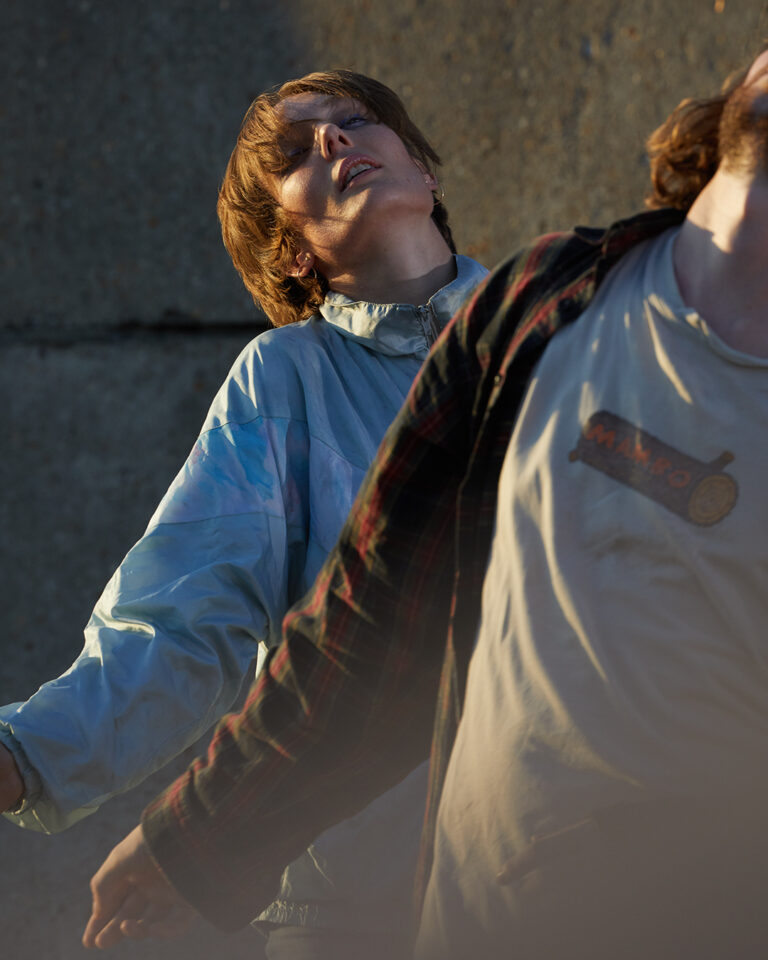
The September part of the program includes performances by Gisèle Vienne and a conversation with the artist. We will be able to see “Sketches of Crowd #8” – a chamber version of the famous performance “Crowd”, adapted to the space of Cricoteka. This three-person etude exploring the mechanisms of the crowd, loneliness and rave presence was created as a reflection on isolation during the pandemic. The performances will take place on September 18 and 19 at 6:30 PM. A meeting with the artist will take place on September 18 after the performance.
In November, as part of “Playing with Kantor”, together with the National Old Theatre in Krakow, we will open at the Cricoteka an exhibition dedicated to the work of Philippe Quesne – French director and set designer. The exhibition “Ghosts and Landscapes” will present visual and sound objects and installations by Philippe Quesne, including pianos from the exhibition “Fantasmagoria” (2022), mole costumes from the performance “La Nuit des taupes. Welcome to Caveland” (2016) and robots from “Le Paradoxe de John” (2025). All elements will be arranged specially for the Cricoteka, creating a new whole, with references to the original contexts. The exhibition will open on November 18 and will run until March 2027. At that time, the premiere of a performance directed by Philippe Quesne is also planned at the Old Theatre in Krakow.
Programme
September 2026
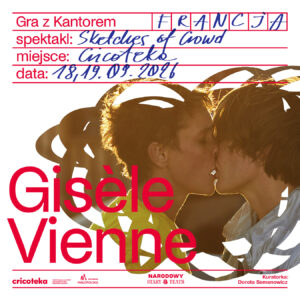
Gisèle Vienne Performance “Sketches of Crowd #8”
Show: 18.09, 6:30 PM
Show: 19.09, 6:30 PM – Tickets HERE
Meeting with the artist will take place after the performance on 18.09.
November 2026
Philippe Quesne
18.11, 6:00 PM – opening of the exhibition “Ghosts and Landscapes”
Nach
open post-residency showing
March 2027
Philippe Quesne
March 13, 2027 – Premiere of the performance at the Helena Modrzejewska National Stary Theatre in Krakow
About the Artists
Gisèle Vienne
French-Austrian choreographer, director, puppeteer and visual artist. Her work consists of performances, often on the border of theatre and dance, as well as art installations, films and photographs. In her performative practice, Vienne focuses on the materiality of human bodies and objects, the dialectic of presence and absence, the living and the artificial, tracing the longings and fears of childhood, adolescence and counterculture, delving deep into the subconscious of viewers. She is currently one of the most recognized and valued French directors and one of the most unconventional in Europe. Her works are presented at festivals, in theatres and galleries around the world.
Anne-Marie Van – Nach
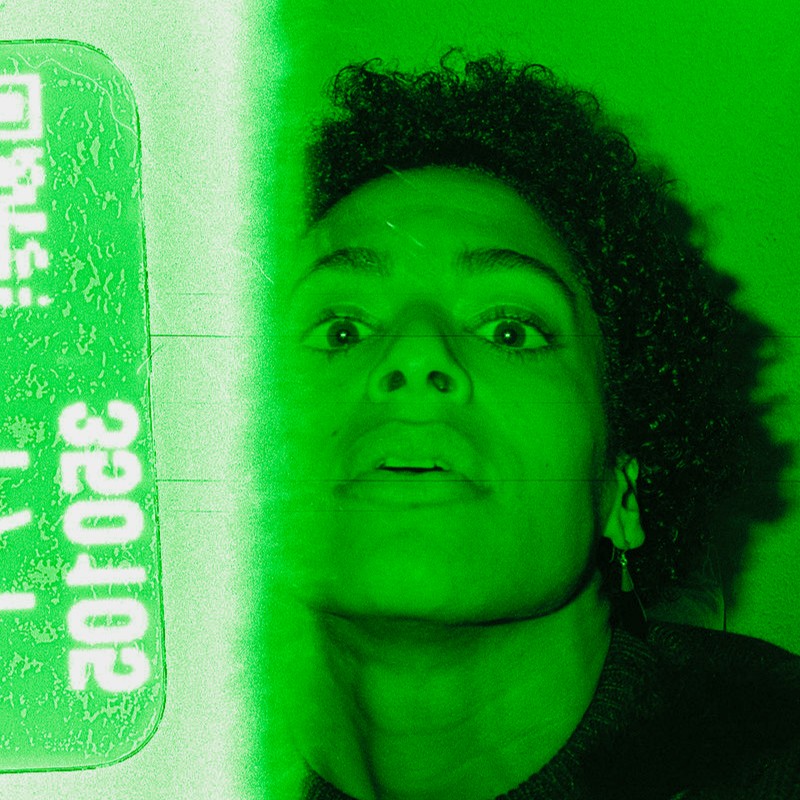
French dancer and choreographer of Senegalese, Vietnamese and Cape Verdean origin. For many years she danced in performances by other artists. Since 2017, she has also been creating her own performances (solo and group), leading an interdisciplinary dialogue with researchers and artists from the world of music, visual arts and puppetry in France and around the world. In her work, she combines words, bodily expression and video, focusing on themes of artistic identity and freedom, as well as the alienation of the black body in an individual/intimate and collective/political context.
Philippe Quesne
Director and set designer. In 2003, he founded the Vivarium Studio company, with which he still creates performances in spaces of a “vivarium” nature, serving to observe human and non-human microcosms. His theatre very often touches on themes related to the need to create, art, ecology and nature conservation, and he himself calls his activities landscape-theatre. The scenographies for his performances resemble images constructed on stage, constituting not a background for the action, but a complex environment. Quesne is today one of the most recognized French artists, and his performances, often grotesque and full of tenderness, are presented all over the world. The director has also staged performances in repertory theatres, including the Schauspielhaus in Hamburg and the Volksbühne in Berlin. From 2014 to 2020, he was the director of the Nanterre-Amandiers theatre in Paris.
Accessibility
The nearest public transport stops are: Korona (tram and bus) and Plac Bohaterów Getta (tram). Cricoteka does not have a parking lot for guests. Two parking spaces for people with disabilities are located on Nadwiślańska Street, near the entrance from the side of Fr. Bernatek Footbridge, however, a high curb may be an obstacle when getting out. Upon prior notification of such a need, we can allocate a temporary parking space in the square.
The most convenient entrance to the building is through the Cricoteka square. After passing through the glass doors, head to the elevator or staircase. The box office is located on level -1. Go there if you do not have a ticket for the event or need additional information/assistance.
To get to the theatre hall, go down to level -1. The staff at the box office will show you the way. Upon prior notification of such a need, you can get to the hall directly from the Cricoteka square.
If you need additional information or would like to use assistance, translation into Polish Sign Language (PJM), audio description or have other needs that we should know about to make you feel comfortable, please contact the accessibility coordinator:
Anna Rejowska (email: rejowska@cricoteka.pl, tel.: 505 319 882)
It is also possible to arrange a pre-visit.
Additional Information
Previous Editions
Team
Artists: Nach, Philippe Quesne, Gisèle Vienne
Curator: Dorota Semenowicz
Production: Wiktor Bury, Aldona Mikulska, Adam Nehring
Promotion: Małgorzata Kmita-Fugiel, Zofia Mikołajska, Martyna Nowak
Implementation Team: Anna Bargiel, Justyna Droń, Mariusz Gąsior, Ewa Kaczmarczyk, Valentyna Khomenko, Agata Klakla, Olga Konik, Jolanta Lang, Michał Lelek, Piotr Masoń, Agnieszka Oprządek, Konrad Pachel, Małgorzata Paluch-Cybulska, Anna Rejowska, Maciej Satała, Tomasz Stefaniak, Barbara Szarek, Aleksandra Treder, Krzysztof Warmus, Olena Yanushewska, Natalia Zarzecka
Visual Identity: Kuba Sowiński
Organizer
Cricoteka – Centre for the Documentation of the Art of Tadeusz Kantor in Krakow
Co-organizer
The Helena Modrzejewska National Stary Theatre in Krakow
Partner
Institut français de Pologne
Project Sponsor
Kraków Airport
Media Patrons
e-teatr, Gazeta Wyborcza, Tygodnik Powszechny, SZUM Magazine, MINT Magazine, Radio Kraków, Radio Kraków Kultura, TVP3 Kraków, TVP Kultura