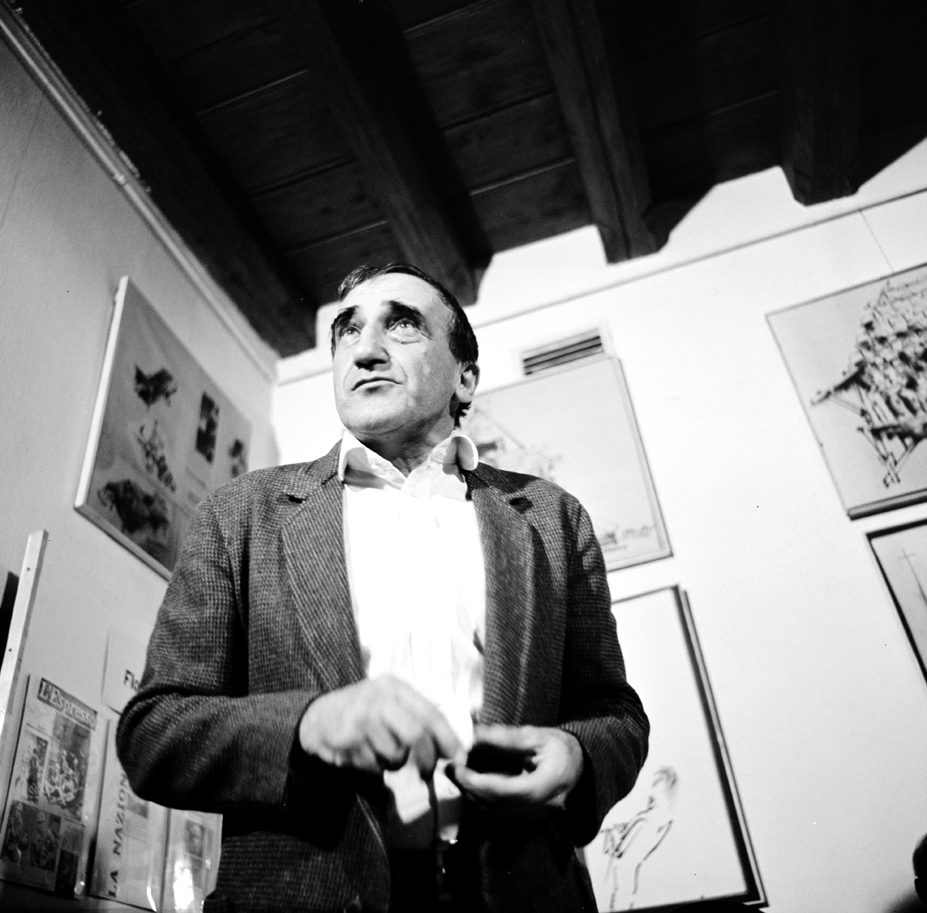
Tadeusz Kantor was born on 6 April 1915 in Wielopole Skrzyńskie and died on 8 December 1990 in Kraków. His achievements as an experimental theatre director and painter, one of the creators of happening in Poland, a stage designer and art theorist earned him worldwide recognition; he was one of the best-known Polish artist and continues to be counted among the greatest names of the twentieth-century avant-garde theatre in the world.
Kantor spent early childhood in Wielopole before his family moved to Tarnów. He studied painting, under Karol Frycz amongst others, at the Academy of Fine Arts in Kraków and remained associated with the city until his death. Kantor was a driving force behind the independent theatre movement in Poland. With a group of fellow students, he formed the Puppet Theatre at the Academy, which staged “The Death of Tintagiles” in 1937. Under German occupation, he started with other students the Clandestine Independent Theatre which gave performances in private living rooms, putting on Juliusz Słowacki’s “Balladyna” and Stanisław Wyspiański’s “The Return of Odysseus”; to these canonic pieces of Polish culture Kantor added his own commentary on the condition of an individual faced with the cruelties of history. After WWII, he worked as a stage designer, mostly for the Teatr Stary, and took part in group exhibitions before getting a teaching job at the Academy in 1948, however, his visionary approach to aesthetics led to his dismissal in 1949 (he would return to teach there between 1967 and 1969) and he had to pursue his painting career largely beyond official mainstream culture.
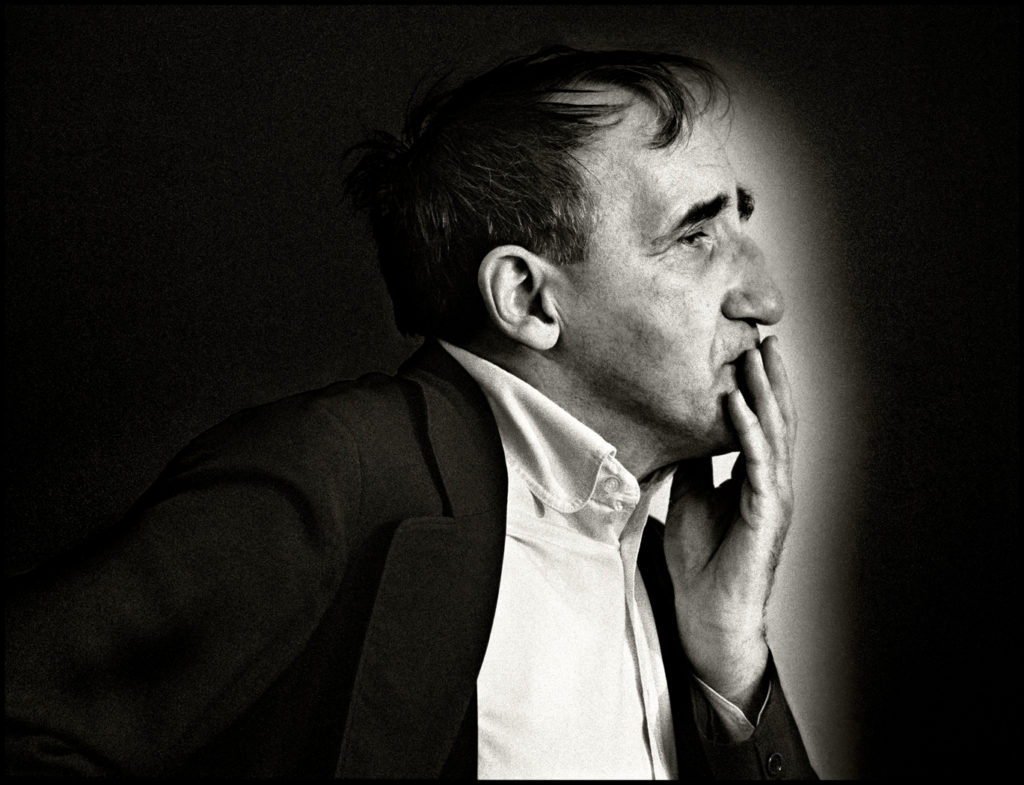
A breakthrough came in 1955 with his participation in the group “Exhibition of the Nine”. The show turned out to be a double manifesto – an act of rebellion against aesthetic tradition in art and an expression of open resistance against the doctrine of socialist realism imposed by the authorities. The show marked the beginning of the Second Kraków Group, of which Kantor was the president in its first years, and the related Galeria Krzysztofory – a mythical space for independent art located in a basement in Rynek Główny, strongly affected by the artist’s personality. He would remain associated with Krzysztofory for years to come, already as an artist setting the tone for modern art in Poland and presenting his work in prestigious galleries across Europe and the United States. It was from there that he, like an indefatigable messenger between the East and the West divided by the Iron Curtain, brought home news of artistic tendencies that he found especially attractive, including abstract Informalism or Conceptualism, while he also drew inspiration for his painting from Post-Cubism and Surrealism. He experimented with figurative painting, incorporating into his canvases shabby everyday objects representing the “reality of the lowest rank”, a key category in Kantor’s work. A full return to representational art would only happen in the final period of his work. He would make it in a typically radical fashion, in cycles of highly intimate self-portraits/confessions that reflected on the condition of a human-artist.
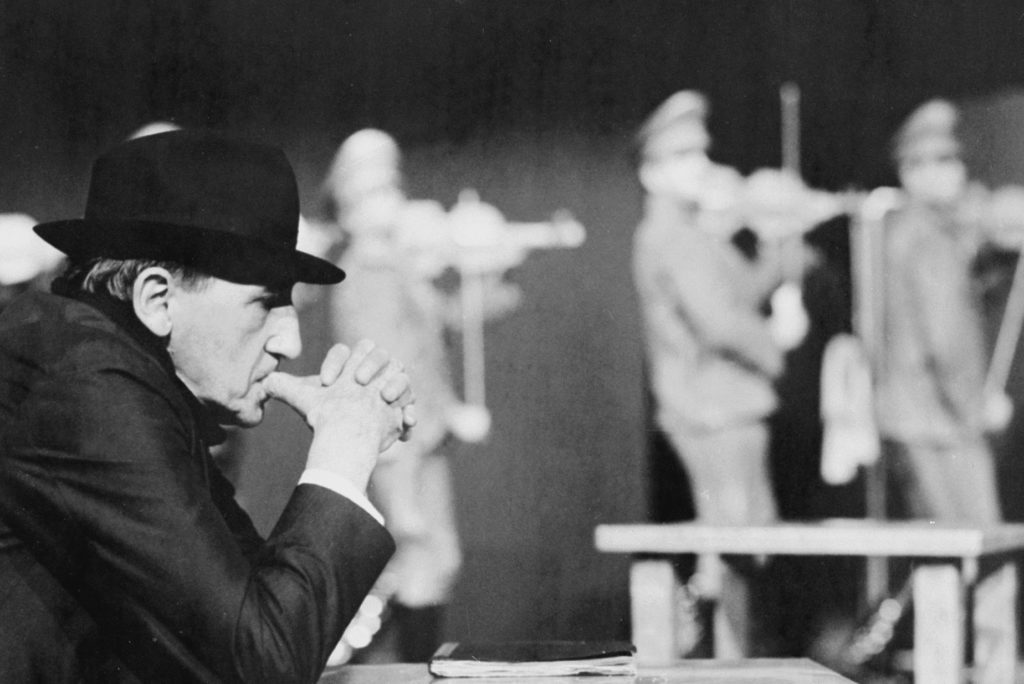
1955 saw another key moment in the biography of the director who founded, together with Maria Jarema and Kazimierz Mikulski, the Cricot 2 Theatre which was to become a mouthpiece for his syncretic experimental fascinations on the intersection of visual arts, theatre, happening and circus. At that time, Kantor mostly put on plays by Stanisław Ignacy Witkiewicz, the pre-war icon of Polish avant-garde: “The Cuttlefish” (1956), “In a Small Country House” (1961), “The Madman and the Nun” (1963), “The Water Hen” (1967) and “Lovelies and Dowdies” (1973), but there was also a production of Kazimierz Mikulski’s “Circus” in 1957. Consecutive premieres were accompanied by the artist’s manifestos that laid out his ideas on theatre: the Informel Theatre, Zero Theatre and Impossible Theatre. At the same period, at Krzysztofory, Kantor revived in his canvases the form of emballage (wrapping) and degraded matter, revolutionised the approach to actors’ performance whose mechanical expression brought to mind Craig’s superpuppets, and categorically rejected the notion of action as it was traditionally understood.
In the mid-1960s, Kantor took up happening, introducing this form of artistic expression to Poland, and developing it through his own happenings that referred to political and social reality, e.g. “Cricotage”, “The Dividing Line”, “The Letter”, “Panoramic Sea Happening” or “Rembrandt’s Anatomy Lesson”.
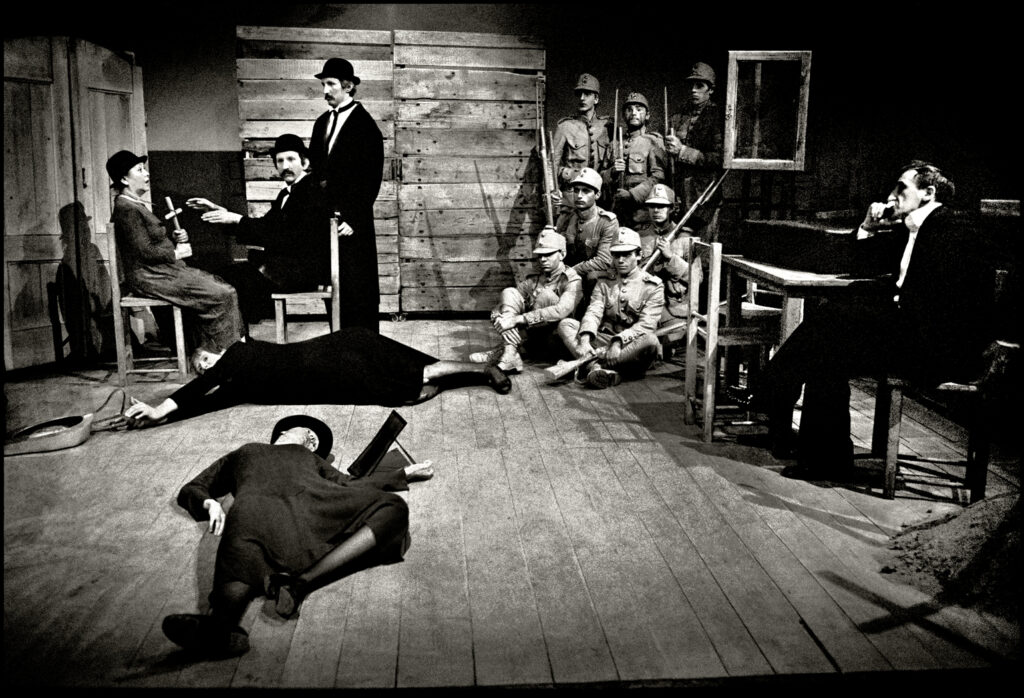
A coda in Kantor’s mature directing work was the cathartic Theatre of Death which allowed him to investigate the workings of private and collective memory, traumas of history and transience. Kantor used the stage to perform séances of his own. The artist, himself often present on stage, summoned spirits of the past from the clichés of memory, while performing a thorough analysis of the childhood in Wielopole and the myths of multicultural past and political misfortunes in twentieth-century Poland. “The Dead Class” (1975), Kantor’s most famous play – a metaphor for the Holocaust and the impossibility of returning to childhood, was filmed in 1976 by Andrzej Wajda. Although Kantor’s previous productions had achieved international renown, the global success of “The Dead Class” meant that Kantor and his troupe embarked on an endless tour, giving performances at international festivals and theatres across five continents. This play as well as those that followed: “Wielopole, Wielopole” (1980), “Let the Artists Die” (1985), “I Shall Never Return” (1988) and “Today Is My Birthday” premiered after his death (1991), captured the attention of audiences from the four corners of the world. Despite their deep immersion in Polish and autobiographical imagery, Kantor’s plays employed plain language that contained references to universal cultural topoi and hypnotised audiences with the clarity of means, especially Kantor’s unique imagination of a painter, highly valued by theatre theorists and practitioners.
Magdalena Link-Lenczowska
(transl. Monika Ujma)